
"The journey of the Instituto Campineiro dos Cegos Trabalhadores began with the vision and determination of a group that sought dignity and autonomy for the blind in Campinas."
The Foundation and the Pioneers
Officially founded in April 22, 1933, like “Campineira League of Blind Workers”, the initiative was born from the deep need for blind people to become useful to society and to guarantee their own livelihood in an honorable way. It was understood that only a legally constituted society could direct and protect the work of the blind, thus resolving their social situation.
The seed of ICCT was planted by a small and courageous group, which included blind teachers and other visionaries: Dante Egrégio, Mário Chaves, Geraldo dos Santos Hummel, Benedito dos Santos Vieira, Avelino de Campos, Domingos Zampini, Arthur Fonseca, Nicola Paceli, João Virgineli and Constâncio Gomes.
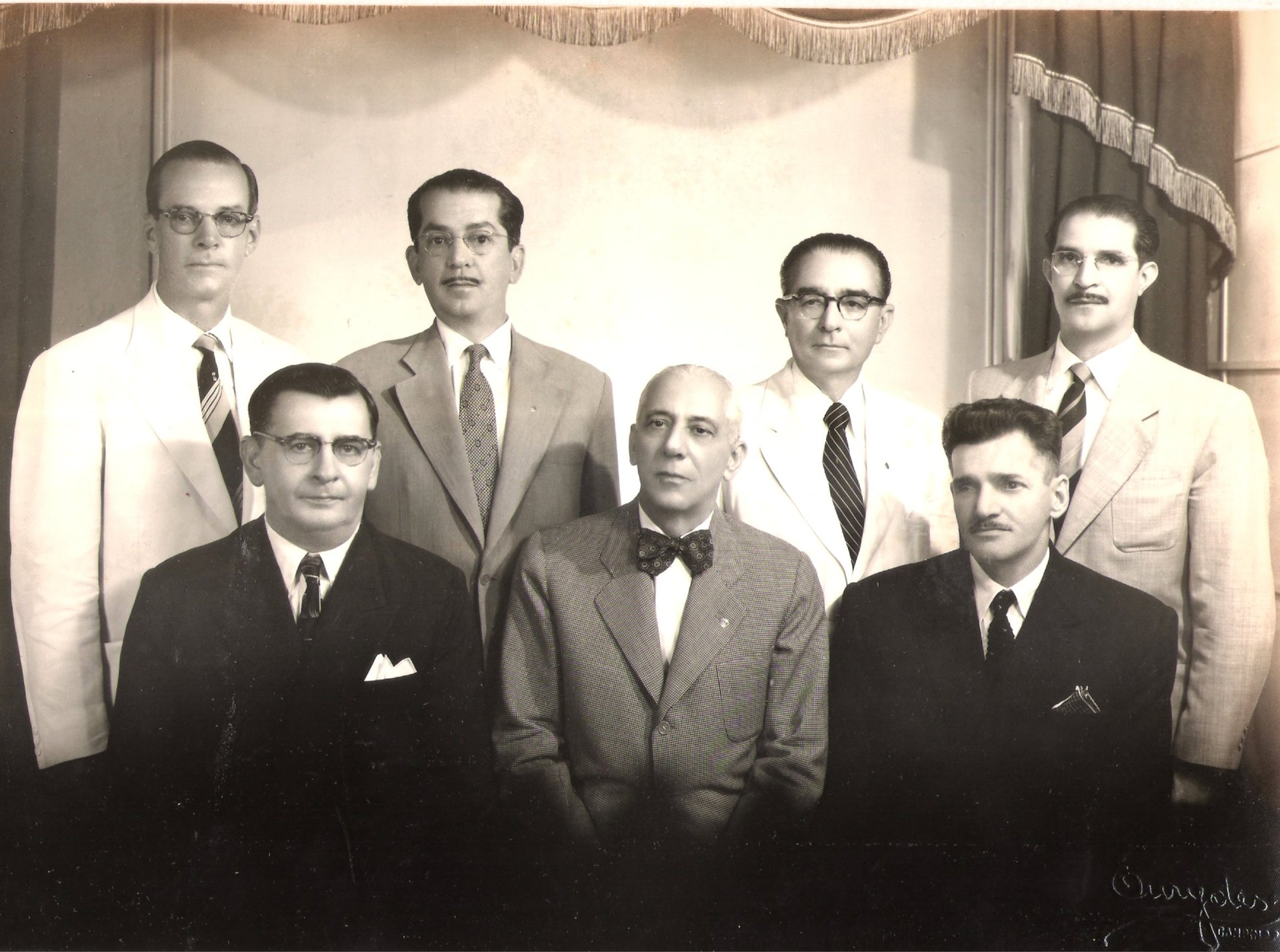
Pioneers and founding members of the ICCT in solemn historical record.
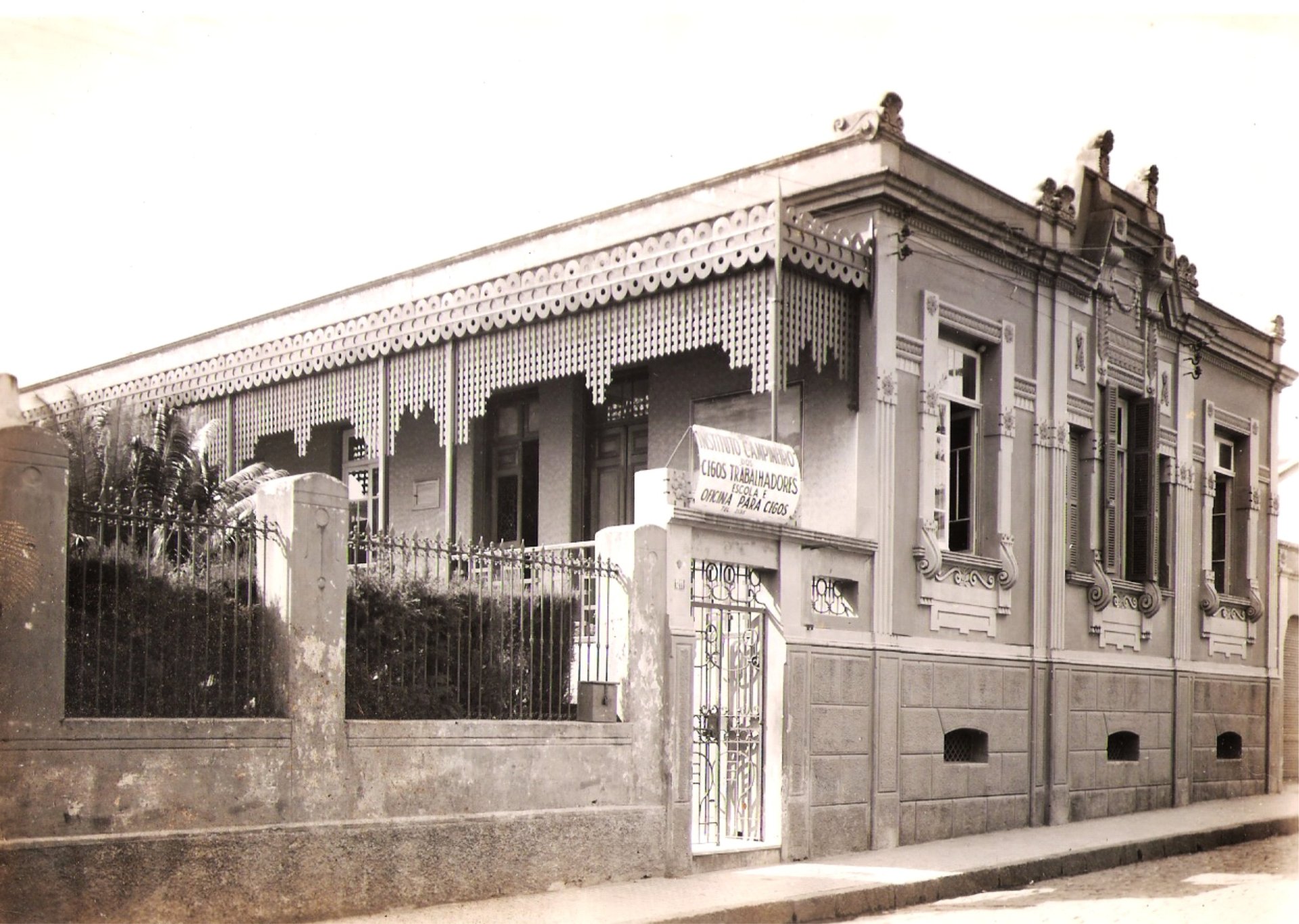
The institution's first facilities provided by the municipality on Rua Regente Feijó.
The First Support and Activities
The idea of creating the Institute quickly echoed in the local press and found support in the authorities. An Organizing Committee obtained from the Municipal Mayor the promise of a building to house the institute, its workshops and the school. The Campinas community applauded the initiative, and the initial membership quickly reached 400 members.
In July 14, 1934, the institution officially adopted the name Instituto Campineiro dos Cegos Trabalhadores (ICCT).
The initial activities were focused on essential skills for autonomy: teaching Braille, solfeggio and piano, in addition to the artisanal production of items such as brushes, brooms and dusters. At that time, blind people also had the possibility of living at the Institute, a fundamental social support.
The Legacy and the Model for Brazil
The construction of its own headquarters was a viable feat thanks to the legacy of the benefactor Dona Risoleta Ferreira Jorge, who in 1948 left part of his farm to the Institute: an expressive area of 19,700 m² of land, with the specific objective of being used for activities related to the visually impaired.
The ambitious construction work began in 1951, financed with resources meticulously collected and saved over a decade. In April 21, 1954, the new headquarters was inaugurated with 2,028 m² of built area, housing workshops, classrooms, main hall, library, cafeteria and dormitories.

Masonry works and structure of the headquarters in the 1950s.
Historical Records Gallery
Images that document nine decades of achievements, buildings and community moments.
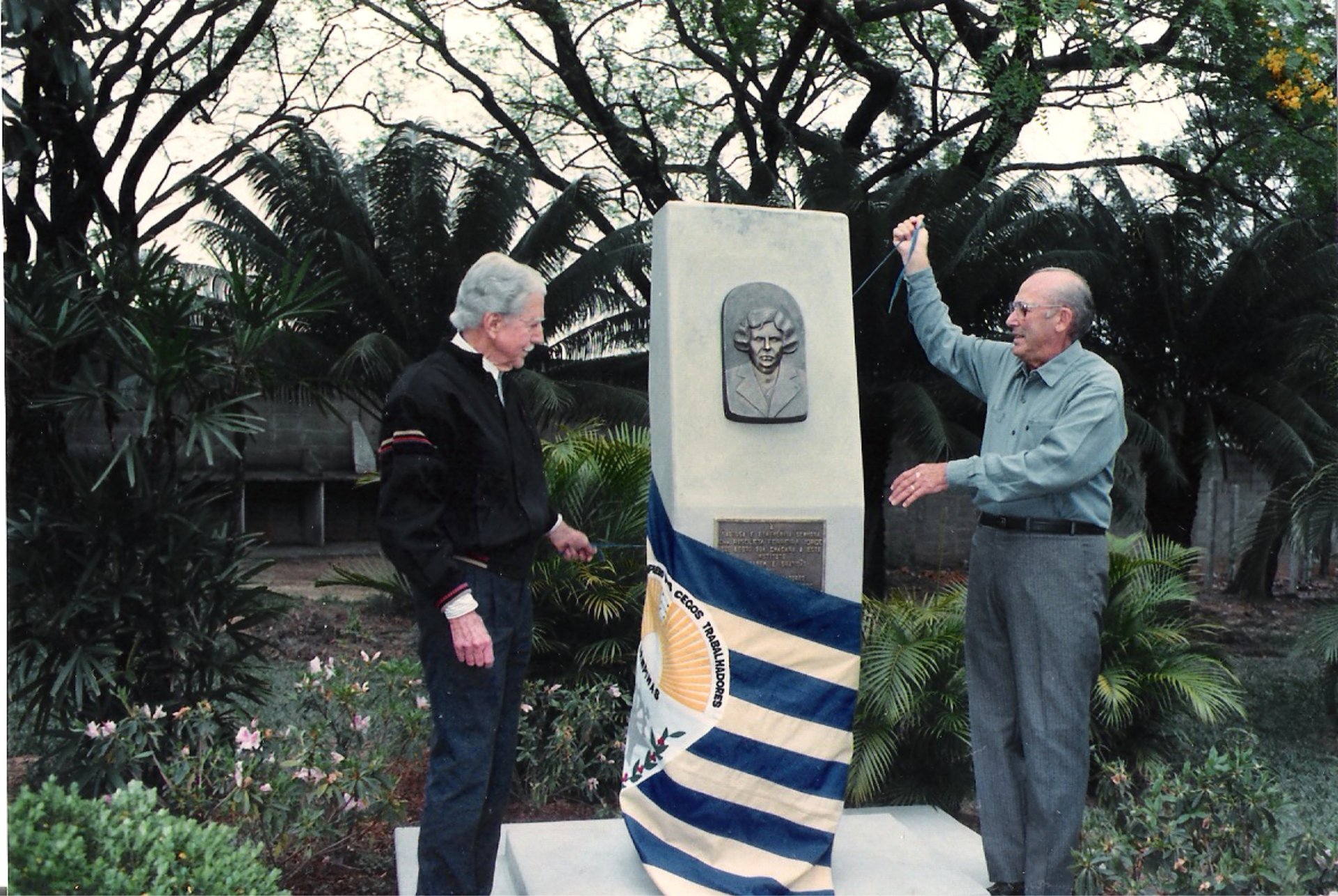
Opening & Tribute
Unveiling the inaugural ribbon in front of the memorial bust at the institution.

External Area & Coexistence
Decorative fountain with statuette of Saint Anthony in the internal courtyard.
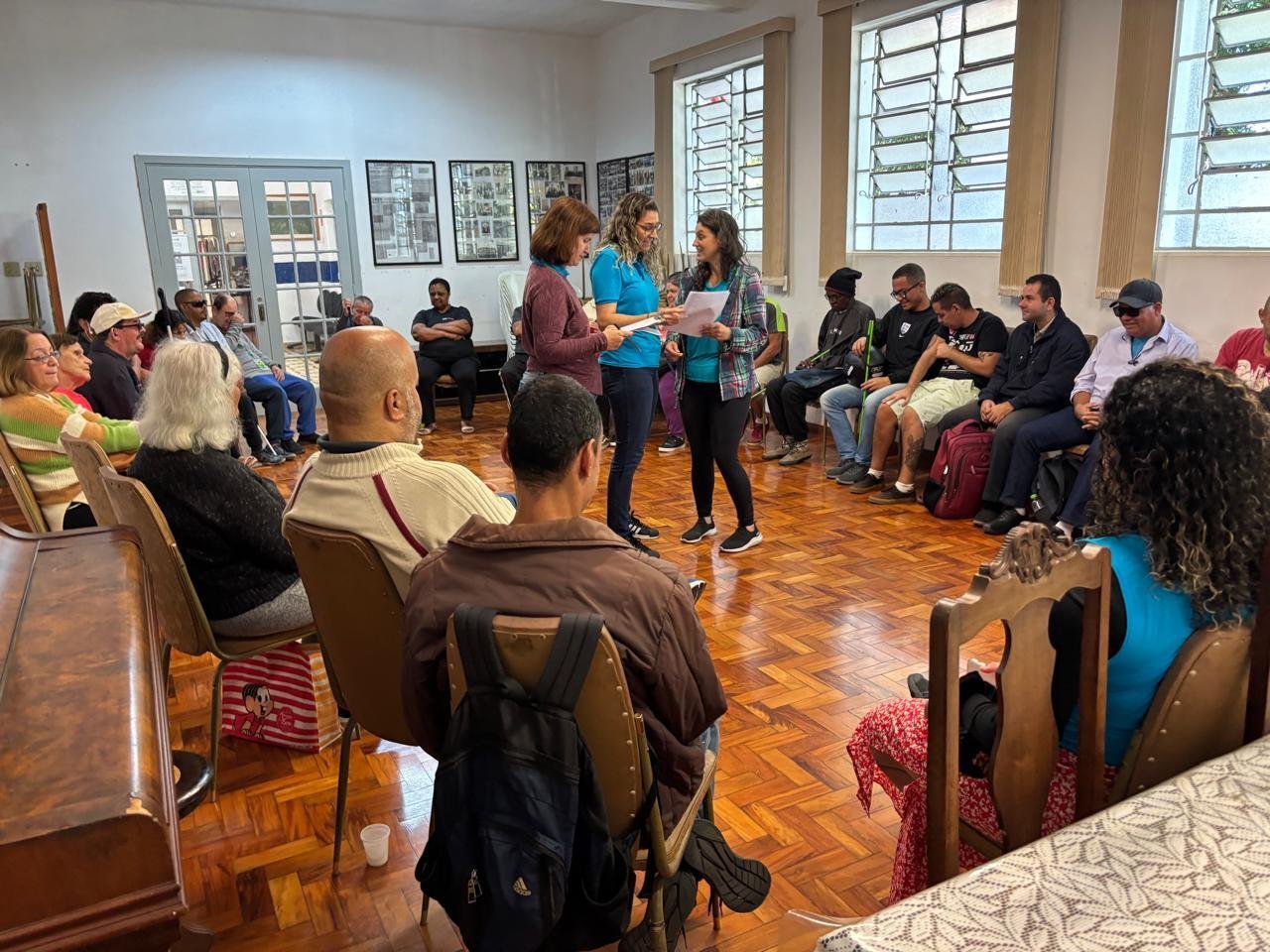
Community Meeting
Presentation of work and assembly in the institute’s Main Hall.
Lighthouse of Hope and Social Transformation in Campinas
Today we are one Civil Society Organization (CSO), a non-profit and philanthropic entity, recognized as Public Utility by the Federal, State and Municipal governments, providing free services to people with visual impairments in Campinas and the region.
Free Service
100% free and humanized service for families in the region.
+20 Workshops
Habilitation, rehabilitation and assistive technology projects.
Full Autonomy
Continuous encouragement of independence and full social integration.